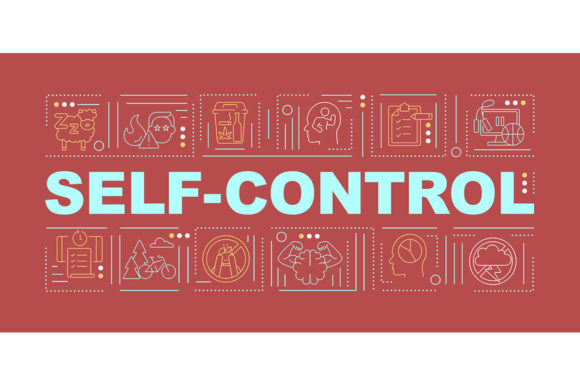
Self Control Tips Word Concepts Banner: A Visual Tool for Strengthening Mental Discipline and Workflow Efficiency
The Self Control Tips Word Concepts Banner is more than just a design asset — it’s a functional visual aid that supports mental clarity, focus, and intentional decision-making. Designed with clean typography and linear icons over a bold red background, this banner serves as a constant reminder of key self-control principles. Whether used in digital workflows or printed for physical workspaces, it integrates seamlessly into environments where discipline and productivity matter most.
How the Self Control Tips Word Concepts Banner Fits Into Broader Processes
In professional and personal development contexts, visual reinforcement plays a critical role in habit formation and mindset maintenance. The Self Control Tips Word Concepts Banner functions as a touchpoint within larger processes such as goal setting, project planning, and time management. It complements structured methodologies like GTD (Getting Things Done), SMART goals, and agile workflows by reinforcing the mental strength required to stay on track.
For creators, entrepreneurs, and educators, this banner can be embedded into dashboards, pinned to vision boards, or displayed during team meetings to keep self-control principles top of mind. Its presence supports the psychological concept of “implementation intentions” — predefining how you’ll respond to challenges before they arise.
Using the Banner Before, During, and After Key Activities
One of the strengths of the Self Control Tips Word Concepts Banner is its versatility across different stages of work or personal development:
- Before a project: Use the banner as part of your preparation phase. Place it in your workspace or digital planning tools to prime your mindset for discipline and clarity before diving into tasks.
- During execution: Display the banner on a second monitor or mobile device during focused work sessions. It serves as a non-intrusive visual cue to stay aligned with your goals and resist distractions.
- After a decision or milestone: Review the banner as a reflection tool. Consider how well you applied self-control principles and identify areas for improvement in future workflows.
Integration with Other Tools and Workflows
The Self Control Tips Word Concepts Banner works best when incorporated into a broader ecosystem of productivity tools and habits. Here are a few examples of how it can interact with other systems:
- Project management platforms: Embed the banner into your Trello, Asana, or Notion dashboards as a motivational header or sidebar element.
- Time-tracking apps: Use the banner as a background image in apps like Clockify or Focus Booster to reinforce intentionality during time-blocked sessions.
- Learning environments: Instructors and course creators can include the banner in slide decks or learning portals to support students’ self-regulation skills.
- Team communication: Share the banner in Slack channels or internal wikis to promote a culture of mental resilience and focus within remote or hybrid teams.
Practical Implementation Across Use Cases
Depending on your role or goals, the way you apply the Self Control Tips Word Concepts Banner may vary. Here are a few real-world applications:
- Freelancers and solopreneurs: Place the banner on your desktop or near your workstation to maintain focus during long work sessions. Use it as a visual prompt before checking social media or email to avoid distraction loops.
- Marketers and content creators: Feature the banner at the top of your content calendar or brainstorming templates to encourage disciplined planning and execution.
- Educators and trainers: Print the banner and hang it in classrooms or training rooms to reinforce self-control concepts during lessons or workshops.
- Small business owners: Use the banner as part of your onboarding materials for new hires to communicate company values around discipline, decision-making, and stress management.
Design and Usability Considerations
The Self Control Tips Word Concepts Banner comes in multiple file formats — EPS, JPG, PNG, SVG, and AI — making it adaptable to both print and digital use. The vector-based formats ensure scalability without loss of quality, while the RGB color profile maintains vibrancy on screens.
For best results, consider the following:
- Compatibility: Choose the right format based on your platform. SVG works well for websites, PNG for high-quality transparency, and JPG for print or social media.
- Placement: Position the banner where it’s most likely to be seen during moments of decision-making — such as login screens, dashboard headers, or habit-tracking apps.
- Consistency: Rotate or update the banner periodically to maintain its psychological impact. Pair it with related content like quotes, checklists, or weekly goals.
Long-Term Value and Habit Reinforcement
While the Self Control Tips Word Concepts Banner delivers immediate visual impact, its true value emerges over time. Repeated exposure to its messaging helps internalize self-control principles, turning them into reflexive habits rather than conscious efforts. This makes it especially useful for long-term personal development plans, habit tracking systems, and continuous learning environments.
For teams or organizations, the banner can be part of a larger visual language around productivity and mental resilience. When paired with consistent messaging, feedback loops, and progress tracking, it contributes to a culture of self-awareness and intentional action.
Conclusion
The Self Control Tips Word Concepts Banner is a strategic tool that bridges the gap between visual design and mental discipline. Whether you’re managing a complex project, building new habits, or guiding a team through high-pressure periods, this banner supports your efforts by keeping self-control principles visible and actionable.
By integrating it thoughtfully into your environment — whether digital or physical — you create a space where discipline is not only encouraged but expected. In doing so, you empower yourself and others to make better decisions, manage stress effectively, and maintain focus in the face of distractions.